Unions in C
Shared memory allocations and differences with structures
What is a Union?
A Union is a user-defined composite data type in C that allows multiple members of different data types to be stored in the exact same memory location.
The union keyword is used to declare a union. While syntactically similar to structures, the fundamental difference between a structure and a union is 'storage'.
Structure Storage
In a Structure, each member gets its own distinct memory offset. Total size is at least the sum of all members.
Union Storage
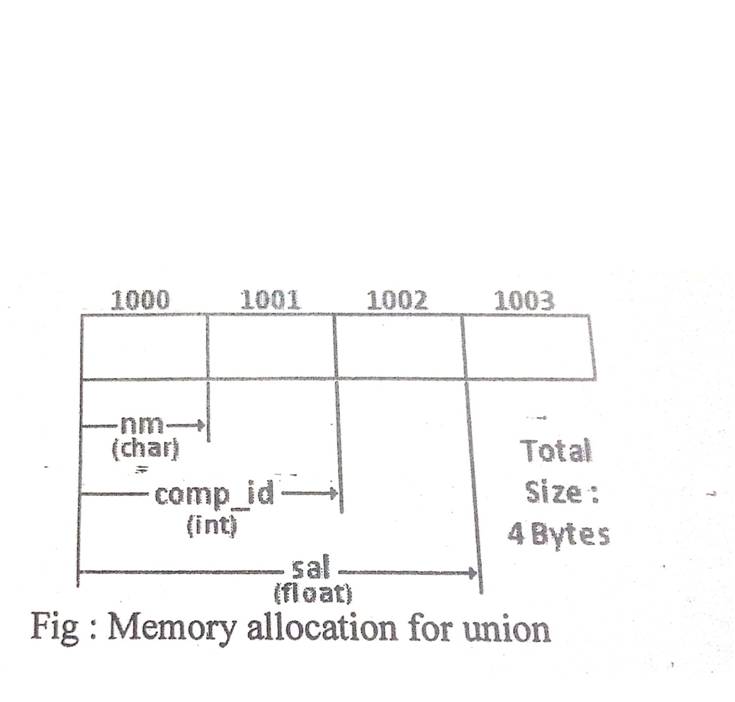
In a Union, all members share the exact same starting memory address. Total size is equal to the size of the largest member. Only one member can hold a valid value at any given moment.
union techno {
    int comp_id;
    char name[20];
    float sal;
} tch;
Shared Memory Allocation Diagram
Illustrating how union members overlap in physical memory:
Demonstration of Memory Overwriting
Notice how assigning to name corrupts the previous integer value stored in id:
#include <stdio.h>
#include <string.h>

union techno {
    int id;
    char name[20];
} tch;

void main() {
    tch.id = 101;
    printf("Developer ID before name write: %d\n", tch.id);

    strcpy(tch.name, "Technowell");
    printf("Developer Name: %s\n", tch.name);

    // Reading id after name was written demonstrates garbage/corrupted value
    printf("Developer ID after name write (corrupted): %d\n", tch.id);
}Developer ID before name write: 101 Developer Name: Technowell Developer ID after name write (corrupted): 1801813332